A federal judge in California ruled on Wednesday against the Department of Homeland Security’s field campaign to find noncitizens registered to vote, largely blocking agents from carrying out field interviews in nine states, including California, The New York Times reports. The order does not take effect until Friday evening, a delay built in to give the government time to appeal.
The ruling, as analyzed from the opinion by the Election Law Blog, turns on Section 11(b) of the Voting Rights Act — the provision against intimidating voters — with the court finding the plaintiffs likely to succeed on that claim. The analysis stresses two things about how the operation was built: the faulty data behind the lists it worked from, and the risk that error-prone lists sweep U.S. citizens into the effort. In court filings, DHS and its investigative arm, HSI, have defended the field operations and the checks run before them.
The ruling lands eleven days before the November 3 midterm elections, with more than 20 million early ballots already cast nationwide.
READ NEXT: Judge Orders Trump To Sit For A Deposition In His $10 Billion BBC Lawsuit By December 11
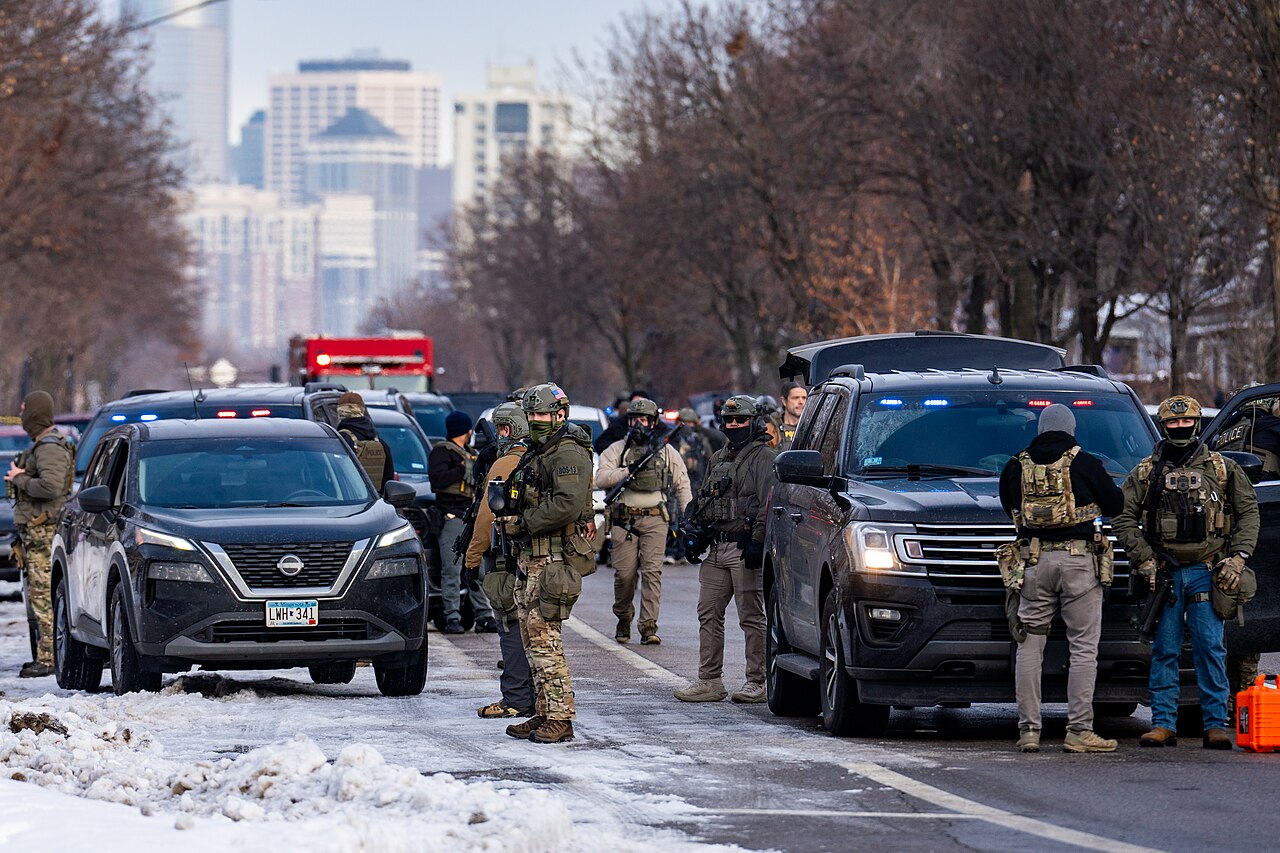
What the operation looked like on the ground: in recent weeks, armed Homeland Security Investigations officers have been visiting homes to interview people suspected of voting illegally as noncitizens — a group that, by the operation’s own design, can include people who became citizens but voted before they naturalized. HSI has publicized the work on social media, including a post showing agents handcuffing a California man accused of unlawfully registering to vote. The field operations were planned in nine states: California, Connecticut, Georgia, Missouri, Nevada, New York, Pennsylvania, Washington and Wisconsin. Internally, the effort is called the Unlawful Voter Initiative.
The judge is U.S. District Judge Araceli Martínez-Olguín of the Northern District of California, a Biden appointee, and the order runs 19 pages. She pointed to a disclosure last month from a U.S. Citizenship and Immigration Services whistleblower alleging rushed efforts to match data to build the target list, and that the list includes U.S. citizens. The court found the lists were built from 48.2 million records obtained from independent sources of questionable provenance, plus 50.6 million more from state voter-roll data or unreliable commercial versions of it. Martínez-Olguín wrote that the government’s use of unreliable and incomplete data, together with the highly publicized arrests, “lead to an objectively reasonable fear of law enforcement entanglements that intimidates citizens from urging or aiding others in exercising their right to vote.” She was explicit about what she was not deciding: “Plaintiffs do not claim, nor does the Court find, that it is unlawful for federal officials to undertake investigations into unlawful voting in federal elections.”
The order’s terms: DHS is barred in the nine states from field operations targeting people agents “know, suspect, or should reasonably know or suspect are U.S. citizens,” and from operations based wholly on the USCIS matching data without further investigation; investigations of people the department believes are genuine noncitizens may continue. The suit was brought by the California Nurses Association and National Nurses United, whose members do voter outreach. Beau Tremitiere, counsel at Protect Democracy, told CBS News: “It was clear from the start that DHS built its lists on bad data, never checked how often it was wrong, and recklessly sent agents to people’s homes weeks before an election.” Eric Balliet, an HSI agent for 23 years before retiring, said: “In my 23 years with HSI, I never engaged in or was aware of any incident or initiative that sent Special Agents to private residences to verify the eligibility of voters.” The injunction stays in effect until polls close on Election Day; the judge stayed her own order until 5 p.m. Friday to give the government time to appeal.
A second legal fight over the same voter data opened on Thursday, October 15, when the League of Women Voters, the Electronic Privacy Information Center and the League of United Latin American Citizens sued the Department of Homeland Security in federal court in Washington. The 42-page complaint, brought by Democracy Forward and Citizens for Responsibility and Ethics in Washington, alleges that DHS obtained voter files from at least 47 states — even as 30 states refused the Justice Department’s requests to hand theirs over — and compiled a nationwide database, merged with commercially available data-broker datasets.
The database, the complaint alleges, may include Social Security numbers, driver’s license numbers, dates of birth, home addresses, voting histories and political affiliations. Internal records cited in the complaint say that by June 2026, Homeland Security Investigations had ingested about 50.6 million records received from the Justice Department and about 48.4 million records from other sources, and that DHS sought to integrate the data with Immigration and Customs Enforcement. The suit alleges violations of the Privacy Act and that DHS exceeded its statutory authority, and asks the court to declare the program illegal, block it, and order the data deleted. DHS did not comment. “Congress created DHS to prevent terrorism, secure the border, and address other specified threats – not to conduct a voter-fraud dragnet in an effort to purge citizens from the voter rolls,” the plaintiffs said.
In California, the fight moved to the mail. On Friday, October 23, the Justice Department ordered county election officials to identify voters it suspects are noncitizens and to set their mail ballots aside. First Assistant U.S. Attorney Bill Essayli’s letter warned that officials who knowingly tabulate ballots cast by people identified by federal agencies as noncitizens “risk becoming aiders and abettors to a federal crime,” and said counties should work with the Justice Department and DHS to establish “who on the accompanying list is a citizen and who is not.” A U.S. Attorney’s Office spokesman said letters went to 57 of California’s 58 counties; Los Angeles County’s registrar confirmed at least 18 counties had received them. Essayli put the statewide list at “a minimum of 20,000. That’s the floor.”
The California letters followed an October 13 letter from Acting Deputy Attorney General Trent McCotter to Los Angeles County and Secretary of State Shirley Weber, which came with a password-protected thumb drive of names of voters “believed likely non-citizens” who had been sent ballots, and a 48-hour deadline. McCotter later conceded the list could contain citizens — “We’re not perfect,” he said — on October 19, the day the Justice Department charged 28 lawful permanent residents drawn from the list. Los Angeles County Clerk Dean C. Logan said: “Maintaining accurate voter registration records is a fundamental responsibility of our office.”
When California balked, the Justice Department sued Weber, Logan and the state. In its emergency filing, the department argued: “Every minute of processing that occurs without segregating the ballots of suspected non-eligible voters causes untraceable disenfranchisement and dilution of the votes of United States citizens.” California’s court filings say 331,000 ballots had already been processed in Los Angeles County. A hearing is set for Tuesday, October 27. Sen. Alex Padilla responded to the letters: “This is NOT A DRILL.”
The Facts
- The ruling: Wednesday, federal court in California (N.D. Cal.); field interviews largely blocked in nine states including California (The New York Times).
- The basis, per the Election Law Blog’s read of the opinion: Voting Rights Act §11(b) voter-intimidation claim likely to succeed; the court stressed the faulty data behind the operation.
- Timing: the order takes effect Friday evening to allow a government appeal.
- The government’s position in filings: DHS/HSI defend the operations and their pre-checks.
- The database suit: the League of Women Voters, EPIC and LULAC sued DHS on October 15, alleging a nationwide voter database built from files from at least 47 states; DHS did not comment.
- The California letters: on October 23 the Justice Department ordered counties to set aside the ballots of suspected noncitizens; a spokesman said 57 of 58 counties received letters; the list is at least 20,000 names.
- Next: a hearing in the department’s suit against California’s secretary of state and Los Angeles County is set for Tuesday, October 27.
Sources: The New York Times; Election Law Blog; court filings (N.D. Cal.); NPR; CBS News.
Comments