Moderna and Merck released the full results on Thursday of the most advanced study yet of a personalized cancer vaccine, the Associated Press reports — and the numbers are the strongest the field has produced. The vaccine, called intismeran, is custom-brewed from each patient’s own tumor. In a trial of more than 1,100 patients whose high-risk melanoma had been surgically removed, adding nine doses of it to the standard drug Keytruda cut the risk of the cancer returning, or of death, by 42 percent at two years; the risk of the disease spreading fell 38 percent. At the two-year mark, 82 percent of the vaccine group were alive without a recurrence, against 70 percent on Keytruda alone. The side effects were mainly a sore arm and fatigue.
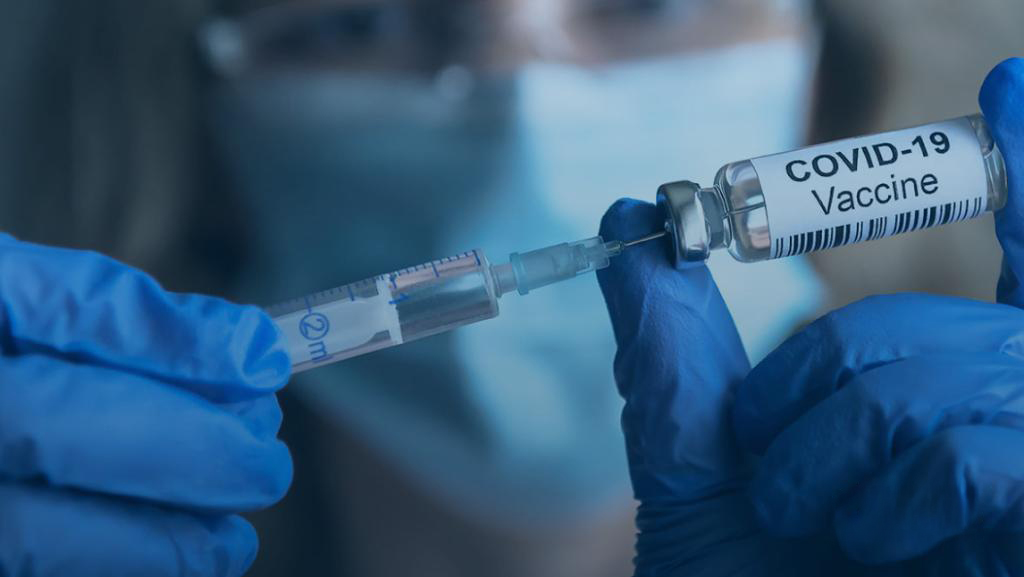
The vaccine uses the same mRNA technology as the COVID-19 vaccines. Scientists sequence the mutations unique to a patient’s tumor and build a vaccine that teaches the immune system to attack the abnormal proteins — neoantigens — those mutations produce. The brewing itself takes days; the full process runs about six weeks.
“The field has been looking for a win and I think this one is a big one,” said Dr. Hussein Tawbi of MD Anderson, one of the study’s researchers. Karen Knudsen of the Parker Institute, who was not involved, called it “a new frontier.” The results were to be presented this Saturday at the ESMO cancer meeting in Madrid; they were released early, on Thursday, after a leak. The companies are now engaging regulators about approval.
READ NEXT: Melania Trump Brokers A Ceasefire For One Occupied Ukrainian City; The Kremlin Confirms It
The trial, named INTerpath-001, enrolled 1,137 patients with completely resected stage IIB to IV cutaneous melanoma, randomized two to one. The combination arm got up to nine doses of intismeran with Keytruda for about a year; treatment began 13 weeks after surgery. The hazard ratio for recurrence or death was 0.58, and for distant metastasis or death 0.62; in a pre-specified analysis, the benefit grew after the first six months, once the vaccine course was complete, with the risk of recurrence or death cut by 58 percent from that point. Overall survival data are not yet mature — the companies report a favorable trend — and the study continues; the partners say they are engaging with regulators and plan to take the data to the FDA. The results have been accepted for publication in The New England Journal of Medicine.
How each dose is built: a sample of the patient’s tumor and a sample of healthy tissue are sequenced, and software selects up to 34 neoantigens — the altered protein fragments most likely to provoke an immune response — whose genetic code is then written into a single messenger-RNA molecule. Professor Georgina V. Long of Melanoma Institute Australia, the study’s principal investigator, said: “For decades, cancer treatment has largely been defined by where a tumor originates in the body. The INTerpath-001 findings support a fundamentally new and individualized approach to treating resected melanoma in the adjuvant setting, one that tailors treatment to the unique mutational signature of a patient’s tumor.”
The phase 3 result follows a smaller mid-stage trial, KEYNOTE-942, in which 157 patients on the combination saw the risk of recurrence or death cut by 49 percent against Keytruda alone at five years. Cancer vaccines were one of oncology’s longest-running disappointments; this is the first phase 3 success for an individualized neoantigen vaccine. Moderna’s shares fell more than 20 percent on Thursday after the results leaked ahead of the Madrid presentation; Merck’s slipped 0.7 percent.
The Facts
- The result: recurrence-or-death risk down 42% at two years; disease-spread risk down 38% (AP; Reuters). 82% recurrence-free on vaccine + Keytruda vs. 70% on Keytruda alone.
- The trial: more than 1,100 patients with high-risk, surgically removed melanoma; nine custom doses, three weeks apart.
- The method: mRNA vaccine built from each tumor’s own mutations (neoantigens); full process about six weeks.
- Next: results were set for Saturday’s ESMO meeting in Madrid and released early after a leak; the companies are engaging regulators on approval.
Sources: The Associated Press; Reuters; Merck and Moderna.

Comments