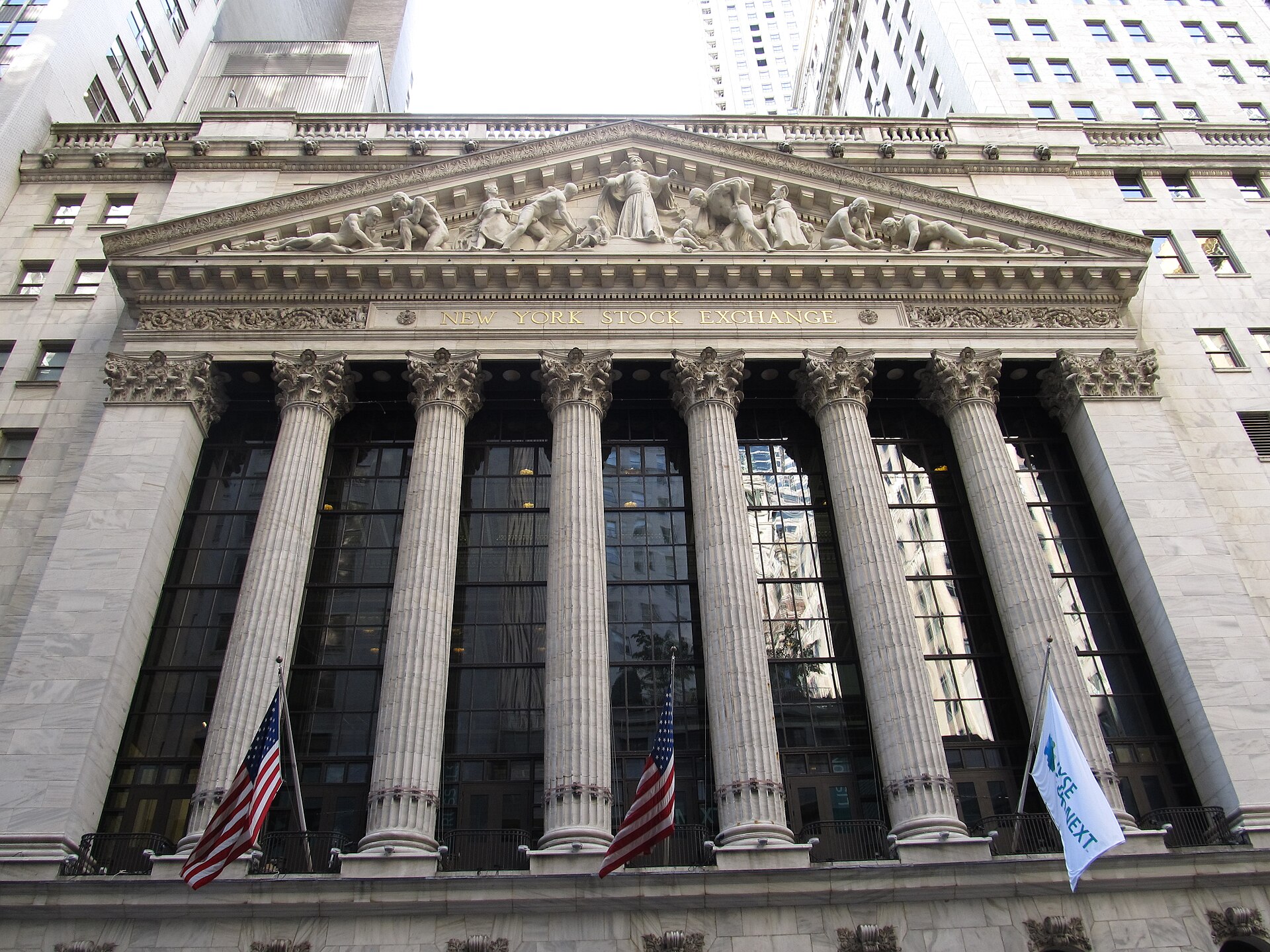
Stocks saw their steepest decline in months on Thursday. The S&P 500 fell more than 1.4 percent — its largest daily decline since July — and the technology-heavy Nasdaq slumped nearly 2.5 percent, its biggest one-day fall since June, the New York Times reported. The driver, in the Times’ account: worries about artificial intelligence — its valuations and its spending. Meta fell 7 percent on Thursday; Nvidia lost 4.5 percent and Tesla 3 percent.
Friday brought a second down day, on different fuel: oil. West Texas Intermediate crude climbed 4 percent to about $103.60 a barrel after Iran warned that renewed strikes by the United States and Israel would set off a wider response across the Persian Gulf. The Dow Jones Industrial Average fell 653 points — 1.2 percent — to 52,215.16. The S&P 500 lost 0.5 percent, to 7,623.68, and the Nasdaq 0.2 percent, to 25,955.34. Energy and information technology were the only S&P sectors to finish in the green, and some of Thursday’s A.I. casualties bounced: memory-chip shares rebounded, and CrowdStrike rose more than 8 percent as the week’s PHP security flaw focused attention on cybersecurity.
Thursday’s rout had specific triggers. Meta fell about 7 percent to $648.85 even after reporting third-quarter revenue up 26 percent, to $64.6 billion: the company had introduced new non-voting shares to help fund its costly AI push, and traders revived their scrutiny of how much capital the AI race requires, Reuters reported. Tesla fell after cutting its annual capital-spending forecast, which raised questions about the pace of its AI and robotics expansion. The selling concentrated in the AI complex: Advanced Micro Devices lost 8.1 percent, Micron 6.3 percent, Intel 8 percent, Lam Research 11.8 percent after its outlook, and Nvidia 4.4 percent. SpaceX gave back 9.1 percent of its Wednesday surge, when strong results from SpaceX and Super Micro Computer had lifted the Nasdaq about 1.1 percent.
READ NEXT: He Left The Force In 2021. He Kept Searching The License-Plate Cameras For Five More Years
Investors moved toward safety as the technology shares fell: the yield on the 10-year Treasury note pushed below 5 percent. Defensive sectors rose on Thursday — consumer staples, utilities and health care all gained — while technology fell about 3 percent. Procter & Gamble rose 5.6 percent on better-than-expected results and Spotify surged 11 percent; Moderna was the S&P 500’s worst stock, down 18 percent after an apparent leak of cancer-vaccine data.
Oil was rising before the stock market opened. Brent crude climbed more than 3 percent in early trading Thursday and finished up about 4 percent, above $113 a barrel, after Houthi attacks in Saudi Arabia and a New York Times report Wednesday evening that U.S. and Israeli officials have drawn up plans for a short, intensive operation against Iran after the midterm elections. Traders also pointed to the State Department’s order for non-emergency personnel and their families to leave Saudi Arabia. National average gasoline prices have remained above $4 a gallon.
Not everything in the economy pointed down. Initial jobless claims came in at 194,000 on Thursday, below the 200,000 expected. On Friday, the preliminary reading of U.S. manufacturing activity reached 56.0, above the 55.4 forecast, and the consumer-sentiment reading improved to 48.0, above the 46.3 expected — the same preliminary October figure the University of Michigan reported earlier in the month. Energy shares benefited from the oil surge on Friday even as the wider market fell again.
The two days, in brief
- Thursday: S&P 500 −1.4% (worst since July); Nasdaq −2.5% (worst since June); Meta −7% on A.I. worries
- Friday: Dow −653 points (−1.2%) to 52,215.16; S&P −0.5% to 7,623.68; Nasdaq −0.2% to 25,955.34
- Oil: WTI crude +4% to about $103.60 a barrel on U.S.–Iran escalation threats
- The week: Dow +0.4% (third straight weekly gain); S&P −0.5%; Nasdaq −0.7%; Russell 2000 +2%
For the week, the Dow ended 0.4 percent higher — its third straight weekly gain — while the S&P 500 finished 0.5 percent lower and the Nasdaq 0.7 percent lower. The small-cap Russell 2000 gained 2 percent, snapping a six-week losing streak.

Comments
Loading comments…