

NATO’s ambassadors convened in Brussels on Monday over the three Russian cruise missiles that crashed inside Poland on Friday, as Polish prosecutors’ findings — that every one of the objects was a Kh-101 built this year near Moscow — turned a barrage aimed at Ukraine into the alliance’s most serious direct incident with Russia of the war.
No one was hurt when the missiles came down at three sites in southeastern Poland, near the Ukrainian border. But Poland’s prime minister called the incursion an intentional provocation, NATO’s secretary general called it a ‘grave violation’ of Polish airspace and guaranteed the alliance would defend every inch of Polish territory, and Warsaw arrived in Brussels with the missile evidence and a request for more allied forces on the eastern flank. Speaking in Berlin on Monday, Secretary General Mark Rutte said Poland and its allies still need to establish whether the crossing was intentional. ‘It is clear that this is a dangerous incident. It comes from Russia,’ he told a meeting of the alliance’s parliamentary assembly. ‘Whether it is intentional or not has to be decided, of course, by authorities. I will never speculate.’
What Came Down, And Where
Poland’s defence minister, Władysław Kosiniak-Kamysz, confirmed three impact sites. A Kh-101 cruise missile — the long-range, air-launched weapon Russia uses in its mass strikes on Ukrainian cities — came down near the village of Nowy Lipowiec, about 60 kilometres (37 miles) from the Ukrainian border, in an open field several hundred metres from the nearest buildings. A second missile crashed near Rudnik nad Sanem. A third object came down near Mołodycz, about 30 kilometres (20 miles) from the border; Polish officials first identified it as a jet-powered drone of the Geran type.
That identification has now been corrected. District prosecutors in Lublin, asked by the Polish government to examine the debris, said in a statement on Sunday that all three of the objects that flew into Polish airspace on Friday were Russian Kh-101 missiles. Their preliminary findings indicate the missiles were manufactured in the fourth quarter of 2026 at facilities in Dubna, in the Moscow district of Russia.
Camera images collected by Poland’s PAP news agency showed a large explosion and a bright flash in a wooded area at one of the sites. Polish authorities secured all three locations and opened investigations.
The Polish Armed Forces said they had tracked as many as 11 missiles and drones in Ukrainian airspace that could have threatened to enter Polish airspace. NATO scrambled Polish, Swedish and Dutch aircraft in response and activated ground-based air-defence radars. A Polish operational commander said the Russian weapons were not engaged because the conditions did not meet Poland’s rules of engagement. Polish reports said a Swedish Gripen pilot patrolling Polish airspace that morning received NATO authorization to shoot down the suspected Kh-101 but held fire because severe weather prevented the visual and optoelectronic confirmation required before firing.
‘An Intentional Provocation’
Prime Minister Donald Tusk said it appeared that ‘we are dealing with an intentional provocation’ by Moscow. He and NATO Secretary General Mark Rutte both said the timing was not a coincidence: the weapons came down on the VIP day of a major Coalition of the Willing military exercise at Nowa Dęba, in the same region. One missile crashed roughly 35 kilometres (22 miles) from the exercise area.
Thousands of troops from 11 European nations are taking part in the two-week exercise, which began on November 9. They are rehearsing a possible postwar mission in Ukraine. President Vladimir Putin has said Russia will not accept European troops deployed to Ukraine after a peace deal and will view them as legitimate targets.
The Institute for the Study of War, a Washington-based research group that publishes a daily assessment of the war, assessed that Russian forces intentionally fired missiles and drones into Polish airspace, and that the Kremlin timed the violations to the exercise in an effort to deter the Coalition’s support for Ukraine and test NATO’s response.
NATO’s Answer So Far
Rutte called the incident a ‘grave violation’ of Polish airspace. ‘This incident is clearly dangerous — a consequence of Russia’s ongoing war against Ukraine,’ he wrote on X, adding that the alliance stood in solidarity with Poland. Tusk spoke with Rutte on Friday.
Warsaw’s formal request was for forces, not for a collective-defence declaration. Kosiniak-Kamysz said Poland was asking NATO to allocate additional forces and support under Operation Eastern Sentry, the alliance’s eastern-flank air-defence mission, including F-35 fighter jets and AWACS-type airborne early-warning aircraft to extend radar coverage. Poland has not invoked Article 5, the alliance’s collective-defence clause, and had not invoked Article 4 consultations — the step an ally takes when it believes its security is threatened — in the reports published by Saturday morning.
The Barrage Behind It
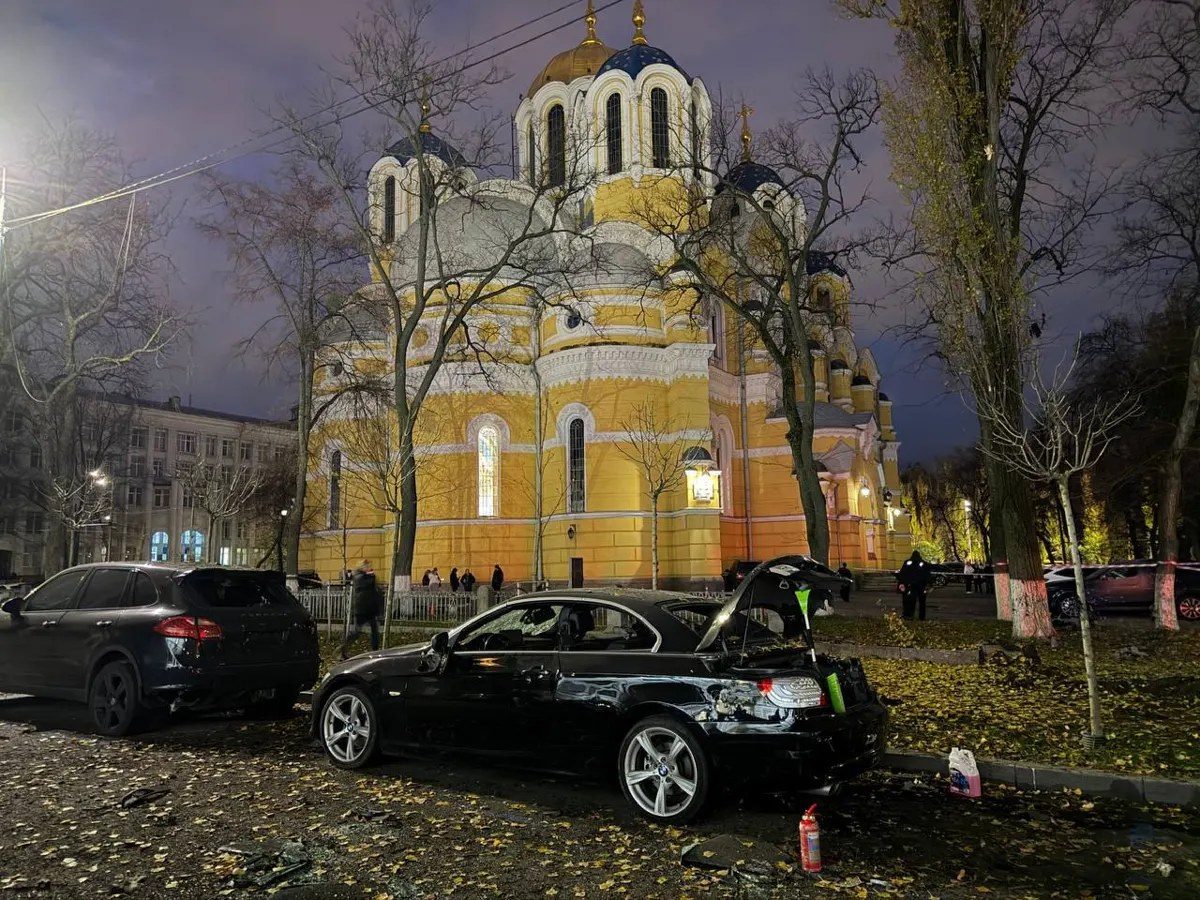
The weapons that reached Poland were part of the strike package Russia launched overnight on Thursday into Friday, hours after Presidents Trump, Putin and Xi issued their four-point ‘peace declaration’ in Shenzhen. Ukraine’s air force counted 84 cruise missiles, 27 ballistic missiles and 404 drones; eight people were killed in Kyiv, three Dnipro bridges were damaged and the Dutch and Austrian embassies were hit. Putin had vowed a ‘far more painful’ response after Ukraine struck the Crimea Bridge for a third time in a week.
A Second Night, And A Wider Pattern
The war did not pause while Poland investigated. Overnight on Friday into Saturday, Russia launched three more ballistic missiles and 148 drones across Ukraine, according to Ukraine’s air force. In Kryvyi Rih, two ballistic missiles struck near a restaurant and drones hit again as rescuers responded, killing a seven-year-old boy and a 20-year-old paramedic and injuring about 60 people.
Early on Saturday, Estonia issued a drone-threat warning for its northeastern counties and NATO jets scrambled; the warning was lifted within about two hours, with no violation reported. Rutte travelled to Warsaw on Saturday and gave Poland his guarantee in person, and said General Grynkewich would identify any threats to the alliance’s defence and deterrence and make adjustments if needed.
The Council Meets In Brussels
The extraordinary session of the North Atlantic Council — the alliance’s principal decision-making body, sitting at ambassador level — convened at NATO headquarters in Brussels on Monday. Poland is represented by Deputy Defence Minister Paweł Zalewski and by Brigadier General Jarosław Stróżyk, the head of Poland’s Military Counterintelligence Service, who is presenting the allies with the evidence from the missiles that fell on Polish territory.
Warsaw came with three aims, Zalewski told RMF FM: to present its assessment of how the missiles crossed the border, to win a clear confirmation of allied solidarity, and to put forward specific proposals to strengthen the eastern flank’s air defence — more forces and surveillance under Eastern Sentry, including the AWACS aircraft and F-35 jets requested on Saturday. Kosiniak-Kamysz said Poland would receive ‘strong support from our NATO allies to strengthen the protection of our eastern border’. Rutte is expected to present the results after the talks; no joint communiqué is expected. After the meeting, Zalewski told reporters that an AWACS early-warning aircraft will be made available to Poland as part of the alliance’s response. ‘This is a very good system that gives us even deeper operational awareness which allows us to respond better to this kind of threat,’ he said. NATO’s AWACS fleet — 14 aircraft with their distinctive nine-metre radar domes, based at Geilenkirchen in Germany — has flown surveillance missions along the eastern flank since Russia’s full-scale invasion of Ukraine in 2022.
Zalewski said there is no need to invoke Article 4, because NATO is already acting to protect the eastern flank; Poland’s foreign minister has signalled Warsaw will also raise the incident at the UN Security Council. Article 5 has not been invoked. Moscow has made no comment on the prosecutors’ findings.
A Drone Crosses Again Overnight
Hours after the Council met, it happened again. During Russia’s nighttime attack on western Ukraine, a Russian unmanned aerial vehicle briefly violated Polish airspace near Dorohusk, in the Lublin region, the Polish Armed Forces said on Tuesday. The Operational Command said air-defence forces were activated, military radar tracked the object along its whole flight path, and authorisation was given to shoot it down; after the drone changed course to the east, commanders decided not to fire, taking into account the potential threat to civilians and the consequences of bringing it down. An air-attack alert sounded in parts of the Lublin region for about an hour before it was lifted, with no damage or casualties reported. Deputy Defence Minister Paweł Zalewski told RMF FM on Tuesday that the drone had been monitored from the beginning: ‘It’s hard to imagine this being a coincidence, so we assume it was an intentional act.’ Polish reports described a jet-powered reconnaissance drone carrying cameras, inside Polish airspace for several minutes. It was the second violation of Polish airspace in four days.
Sources: The Associated Press, November 20–21, 2026; Reuters, November 20–24, 2026; RMF24, November 22–24, 2026; statement of the Polish Armed Forces Operational Command, November 24, 2026; statement of the district prosecutors in Lublin, November 22, 2026; Institute for the Study of War, Russian Offensive Campaign Assessment, November 20, 2026; CNN, November 21, 2026.


Comments