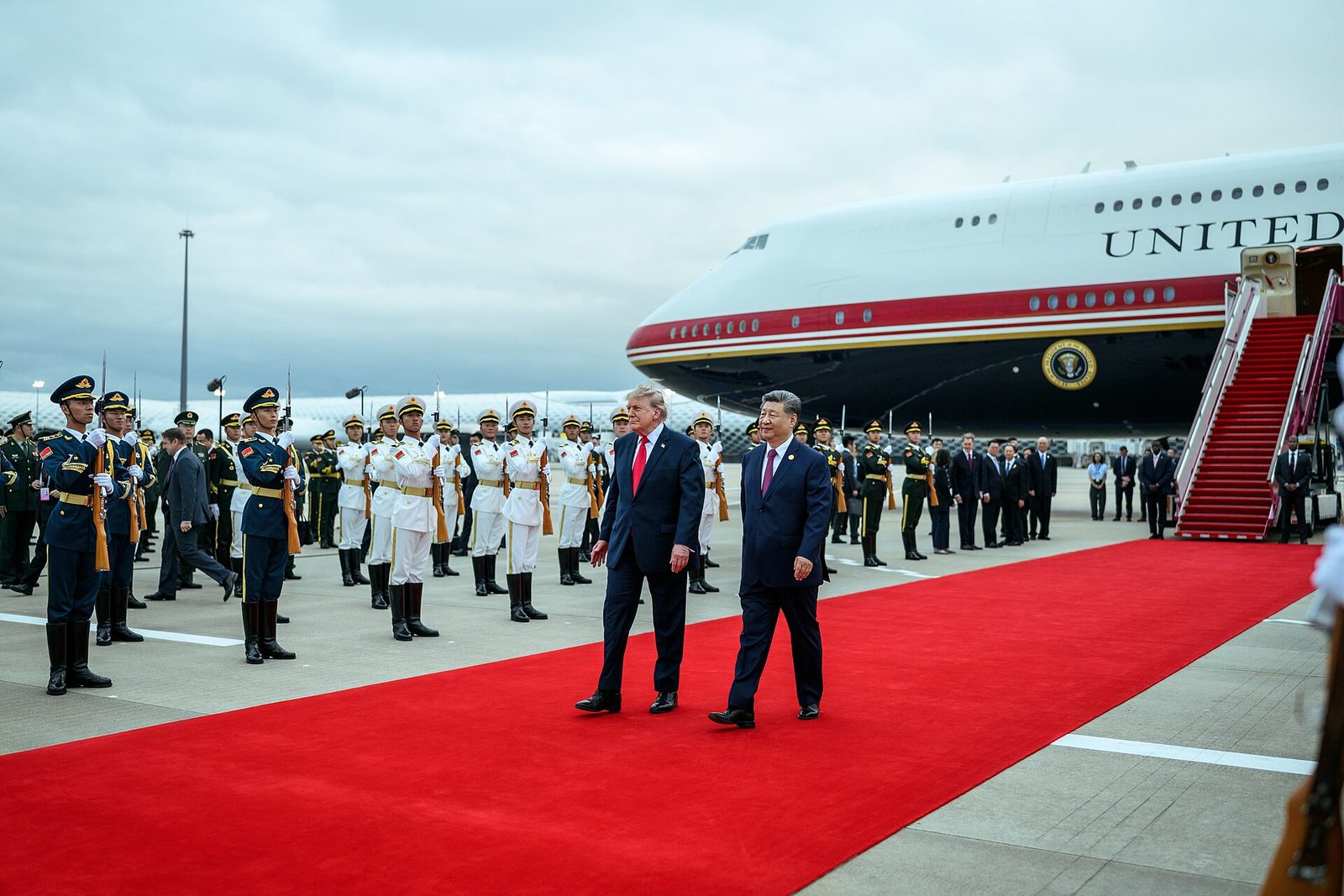
The Shenzhen summit got its verdict from Europe within a day, and from Moscow within two. More than 30 heads of state and government from the ‘coalition of the willing’ — the countries backing Ukraine — met in Berlin on Thursday, hours after Presidents Trump, Xi and Putin concluded their talks in China, and dismissed the first meeting of the American, Chinese and Russian leaders as a ‘photo op’ that stood no chance of bringing peace to Ukraine. On Friday, Russia’s deputy foreign minister, Sergei Ryabkov, killed the one concrete idea the week had produced, rejecting NATO-style security guarantees for Ukraine in terms that left nothing to negotiate.
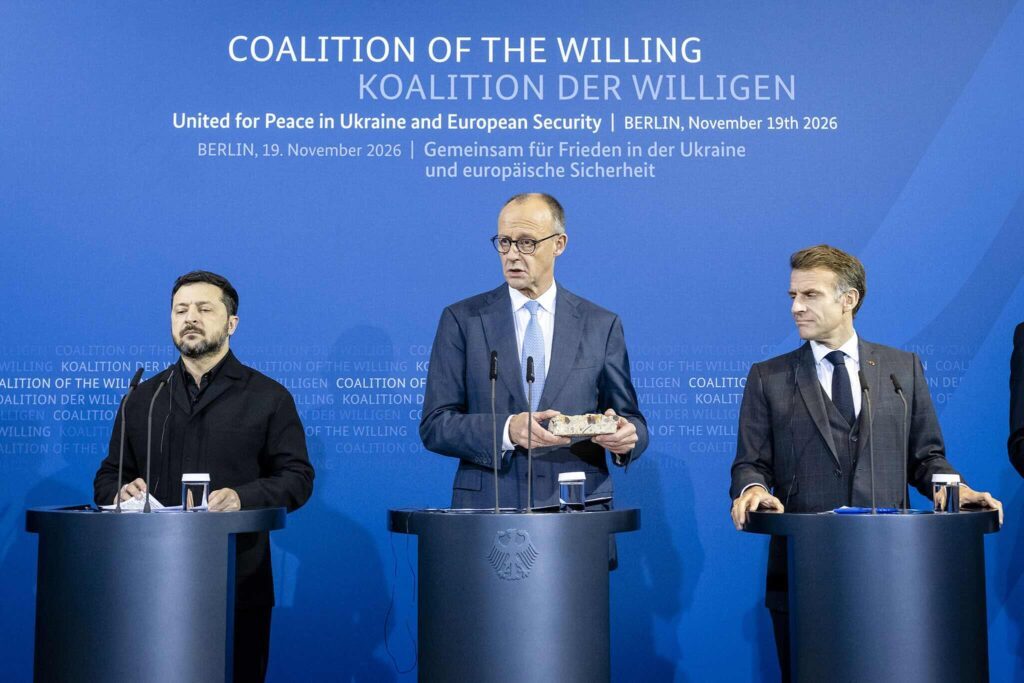
The Berlin meeting, hosted by Chancellor Friedrich Merz and co-hosted by President Emmanuel Macron of France and Prime Minister Andy Burnham of Britain, brought President Volodymyr Zelensky of Ukraine to the same table as Jared Kushner and Steve Witkoff, President Trump’s envoys. Its joint declaration — issued by Germany, France, Britain and Ukraine — reaffirmed commitments by NATO allies to provide €70 billion in military assistance in 2026 and at least the same again in 2027, alongside the European Union’s €90 billion Ukraine Support Loan. Burnham confirmed London’s £10 billion support package and announced more than 1,000 long-range strike drones for Kyiv. The coalition also agreed to intensify pressure on Russian energy revenues and on the shadow fleet that carries them.
A Piece Of The Berlin Wall For Every Leader
Merz gave every participant a fragment of the Berlin Wall, the barrier that divided the city and the continent for 28 years. ‘The Berlin Wall brought oppression, insecurity, and discord. And that is precisely what Yalta stood for,’ he said, naming the February 1945 conference at which Roosevelt, Churchill and Stalin settled the postwar order and, in the European telling, the division of Europe. ‘At Yalta, Europe was divided up. It was parcelled up. And we won’t allow anything like that to happen again,’ Merz said. ‘A Yalta format will not bring peace.’
The leaders of the E3 — Britain, Germany and France — together with Ukraine called on Russia to agree to a ceasefire on attacks against energy infrastructure for the duration of the winter. President Trump telephoned the meeting from Air Force One on his way back from Shenzhen and pressed the Europeans on their spending, one official told The Times: ‘He was telling the Europeans, “Enough already, you’re spending so much money on the war and you need to be spending it on your own countries’.”’ Trump argued they would not need to spend such sums propping up Ukraine’s defences if they put more effort into ending the war.
‘Comfortable’ — The Claim
Kushner, the president’s son-in-law and a member of the American negotiating team, had offered the Europeans the week’s one concrete idea. Speaking in Berlin on Thursday, he said Washington had ‘gotten the Russians comfortable with that concept, where any security guarantee for Ukraine would be based on Article 5’ — NATO’s collective defence clause, under which an attack on one member is treated as an attack on all. Trump, he said, was ‘open’ to such a guarantee: ‘From America’s perspective, giving an Article 5-like security guarantee is a really, really big deal.’ He added that President Trump ‘wants to make a deal with Europe by his side. He’s not looking to impose anything unilaterally.’
Zelensky questioned whether Kyiv and Washington meant the same thing by the words. ‘Article 5 means that certain partner forces are present on your territory,’ he said, repeating that a postwar Ukraine would need foreign troops on its soil — the very thing such a guarantee would imply, and the very thing Moscow has ruled out throughout the war.
‘Unacceptable To Us’
On Friday, Moscow answered. ‘I would like to say that even the notion of a formula for Ukraine’s quasi-membership of Nato, and the search for some sort of, in inverted commas, “creative solution” in this area, is an option that is unacceptable to us,’ Ryabkov said. ‘We discuss security guarantees first and foremost in terms of ensuring the security of our own country.’ Russian state media reported that he set a further condition: guarantees could be discussed only once Kyiv accepted Moscow’s demand that Ukraine never join NATO.
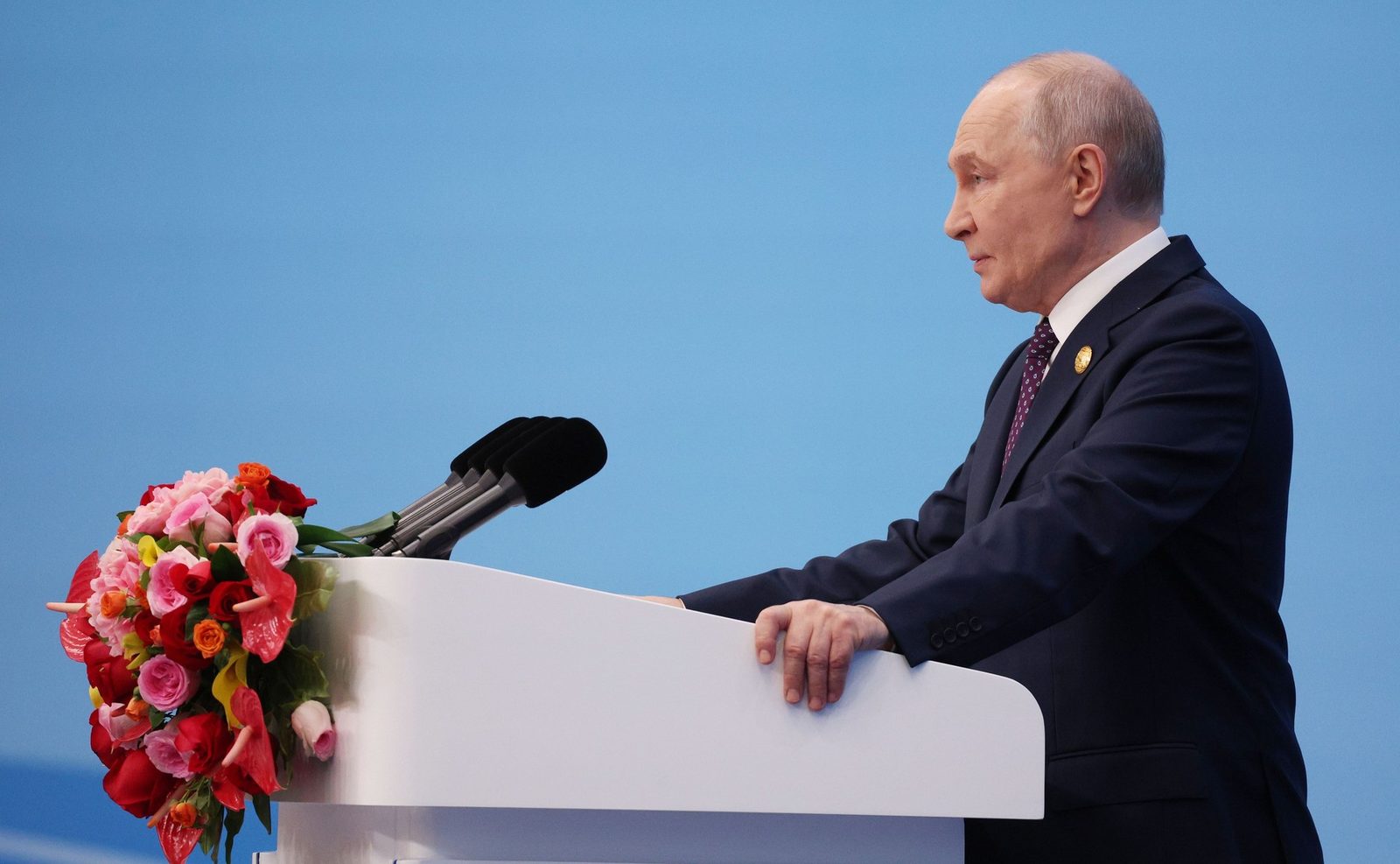
Putin, speaking in Shenzhen, had taken a different tone about Europe’s place at the table. Russia had invited European leaders to Moscow through diplomatic channels, he said: ‘We understand that discussing issues linked to security in Europe is pointless without the Europeans.’ But he added that Moscow could not accept any form of military co-operation between Ukraine and Europe. Merz said new negotiations could take place soon, with Europeans joining the United States, Russia and Ukraine, and that neutral ground was being sought — the United Arab Emirates was a possible venue. Macron urged the allies to ‘reopen the question’ of Ukraine’s membership of NATO.
‘A Position Of Strength’ — And A Shrug From The Markets
In Washington on Friday, President Trump held a news conference at the White House at noon to tout the trip, flanked by Vice President Vance and Secretary of State Marco Rubio. ‘The United States entered this trip from a position of unmatched economic and diplomatic strength,’ he said. He noted that oil prices have been dropping and tied them to Iran — ‘They want to make a deal, but they don’t want to make a deal that’s acceptable to me’ — and said he and President Xi had agreed to ‘joint guardrails’ on what he calls ‘super intelligence’. The summit itself, he had already said on Truth Social, was ‘Great and Highly Consequential’.
The markets gave the declaration a shrug. European diesel-grade gasoil slipped about 1.5 per cent and crude was essentially unchanged, with Brent crude settling flat at $91.98 a barrel, just under $92. Rystad Energy, the consultancy, said the three leaders’ pledge to raise refined-product supply ‘offers little near-term relief’: the declaration — some 230 words on UN reform, oil supply, the International Criminal Court and nuclear risk — contains no volumes, dates, prices or enforcement mechanism, and does not mention Ukraine at all.
Sources: The Times, November 20, 2026; Reuters, November 20, 2026; NPR, November 20, 2026; Rystad Energy, November 20, 2026.
Comments